Investing is all about putting money down now for benefit in the future. But investing in communities and ecosystems often means that the social and environmental benefits can start to accrue now to a community. A major win-win.
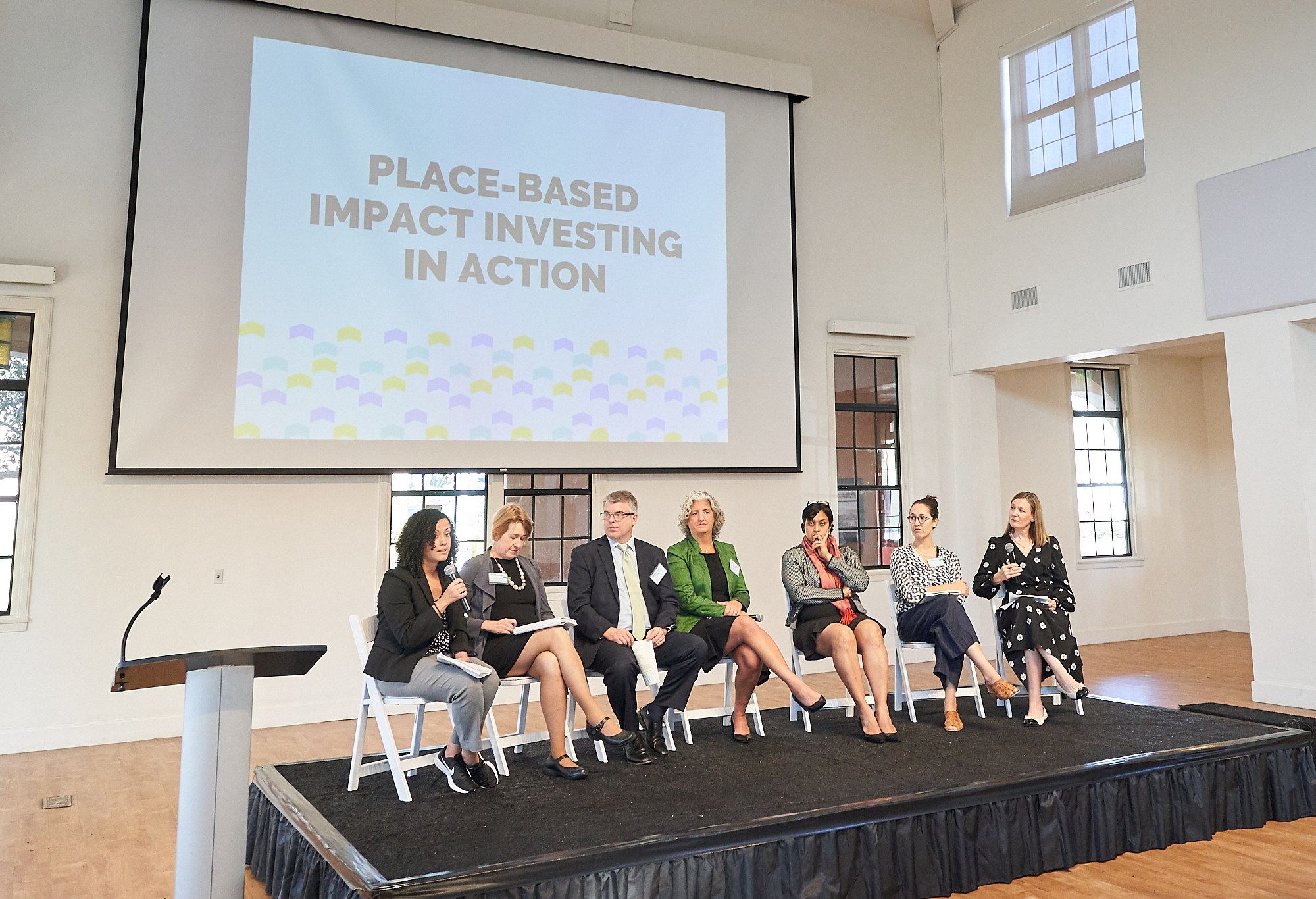
Back when conferences were a thing people did in person, I was a panelist at a conference about Place Based Impact Investing In Action in San Diego. I can’t say we figured out all the answers that day, but I was honored to be part of the conversation with many friends and funders.
When I first started joining this conversation as the lone entrepreneur-developer voice on the conference panels, I was often shocked. I was shocked because I heard investors say all.the.time that they had money at the ready but couldn’t find investible, “shovel-ready” projects. Federal and state funding often similarly targets shovel readiness. Makes sense, investors want to minimize risk. But how can local communities participate on equal footing when the cost to get climate resilient projects to the point of being “shovel ready” can cost major $$$ in technical planning and designs?
This was the predevelopment funding gap the renewable energy industry saw 30+ years ago. The answer then was government and in some cases philanthropic support for predevelopment. In the case of energy, the link to financial returns is often much clearer than nature-based resource solutions.
Where does this predevelopment funding come from for more fledgling industries? Who is paying for green stormwater infrastructure, wildfire suppression, or other climate resiliency predevelopment projects? Who is helping the underserved communities in need of investment apply for the few predevelopment funds to ensure shovel-ready projects are, well, ready? The role of philanthropic capital and accessible government funding is clear.
The role of utilities, too, is important because their quasi-government capabilities and obvious interest in infrastructure. Because we in the climate space often forget: the solutions we are talking about, as integrative as they may be, are fundamentally, infrastructure.
 Laura Brenner Kimes