My Climate Career: from Scientist to Policy Analyst to Consultant to Founder to Aspiring Funder + Investor
Story is something I have been thinking a lot about. Integrating and challenging my personal narrative at this stage has been uncharacteristically difficult. I think because I’m entering mid-life and all the questions and wall-breaking that entails, writing my career story has taken on deep meaning. This is a work in progress, and I will post more on some of the overarching themes with time. For now, here is my magnus opus career story blog post:
1._College Climate Scientist And Cleantech Policy Analyst
I have always wanted to work in climate. My story quaintly and quietly begins as a child who was encouraged to bask in nature when I needed comfort. I built made trails, planted gardens, wrestled spicy sassafras branches into small forts, and laid reading historical fiction for hours in a hammock in the forest. While people could be unpredictable, the warm sun, bird sounds, and green leaves framing the sky made for a safe haven. Early on, I was concerned about climate change and enjoyed writing. In a high school english class in 2000, I wrote a pseudo Modest Proposal calling for more pollution so that Alaskans could experience a “true summer” (alas that gem of an essay I fear has been lost with time). As I launched into adulthood, I considered other careers for about 30 seconds, but environmental work was truly always calling me and I was fortunate to have listened.
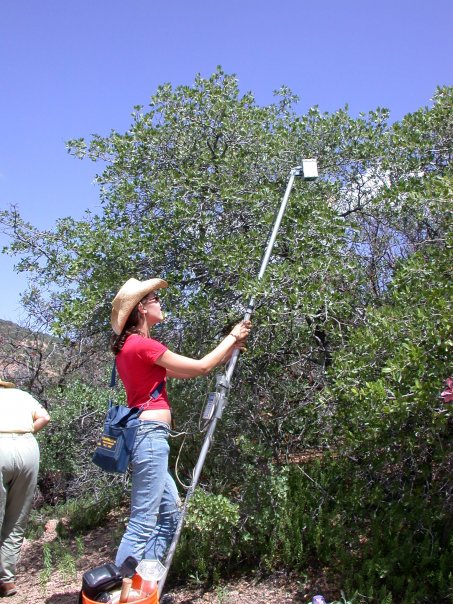
I started my professional career in college with a federal internship. While I was studying Environmental Science and Policy, I had a wonderful opportunity to work at the Agricultural Research Service arm of the USDA briefly at a pesticide research lab and later at the Hydrology and Remote Sensing Lab for 3 years. The learnings were rich and the work was a combination of unskilled college kid labor but also very technical and analytical. For 3 summers in 2004-2007, I worked 7 days a week collecting soil samples through the soybean fields and rangeland of Chickashaw Oklahoma, Tombstone Arizona, and Ames Iowa. Countless rental car tires were flattened with the daily morning driving up dry creekbed washes to beat the afternoon monsoon storms. I loved this work outdoors and thrived in the team oriented work outdoors and the data analysis the rest of the year. I was excited to do anything that exposed me to new and interesting things and ideas. Case in point: I was briefly a lifeguard for an anaerobic digester pool while a grad student took measurements from a boat in the fresh liquid manure. I also processed frog tissue samples and soil samples (read: mud) from all over the US. One of my proudest moments from this experience came in 2005, when as a mere undergrad, my photo was used on the commemorative pen for the international climate modeling experiment. Ha! Trust me when I say it was a huge honor, more so than any award or certificate. And yes, I still have those pens.
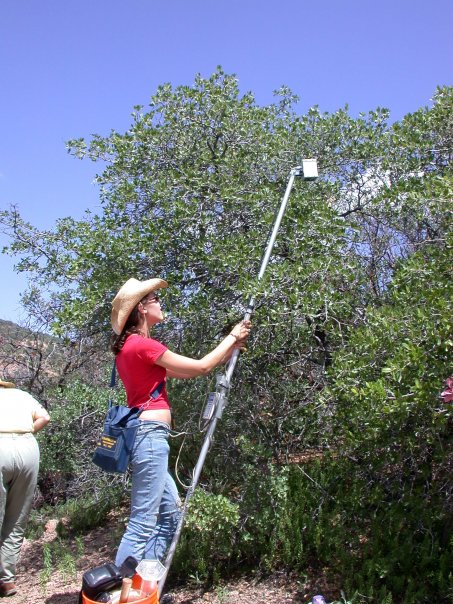
Measuring vegetation in Tombstone AZ, circa 2005 
I’m on the pen!! NASA + USDA Soil Moisture Experiments
As I spent those 4 years deepening my focus on the environment and climate change, I began to realize that I needed to understand the social science. By studying climate change, we cannot stop it. We stop climate change by working through policy levers, community organizing, and social movements. I wanted to understand how these levers worked. As I prepared to graduate with my Bachelor’s degree, I set my sights on climate policy. First, that took the shape of a year at the US Environmental Protection Agency publishing a paper that reviewed different emerging biomass and biofuel technologies for policymakers. In writing that paper, I met a distinguished former marine, early Department of Energy founding staffer, and DC-area biomass and climate champion, Bill Holmberg. Bill was “cleantech-famous” for having been one of the first supporters of biofuels and bioenergy and an environmental justice ally and champion. Every day I knew Bill, he wore a faded jean vest under his suit jacket, perfectly summarizing his persona through that single wardrobe constant. Bill took me under his wing as his first associate at the Biomass Coordinating Council (he was Chairman) and soon I was working for him in the small nonpartisan nonprofit membership organization for the renewable energy industry, American Council On Renewable Energy (ACORE).
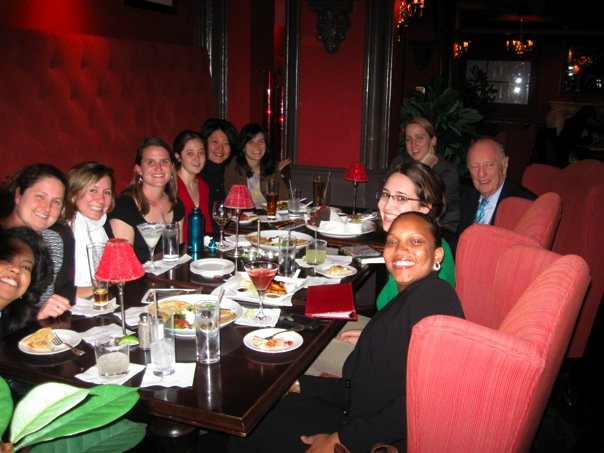
My ACORE Goodbye Dinner, Circa 2009
It was at ACORE that I met lifelong friends and mentors, organized VIP events at the Library of Congress and the US Congressional House Office buildings, led a team of volunteers for an international conference attended by then-President Bush, and was a volunteer at the Clean Energy and Environmental Inaugural Ball for then-President Obama. The experience representing the renewable energy industry afforded me a view of the industry from the highest vantage point. At such an early point in my career it was an incredible experience to be essentially airlifted to see the big picture of the entire industry — who knew their sh*t, who was faking it, and where the real impact was happening. The VIP nature of the work also was disarming and exciting to me and my experience formed deep connections and learnings for my career. Working for Bill, I learned from his masterful leadership to call on his network to build things. I saw that the people who built the table (as ACORE did) could control the conversation. I learned what authentic and trusting professional friendships looked like even in the social transactions of Washington DC. To this day, I learned to love networking while others clamor away. I learned to embrace politics and power for the ability to change all organizations, and I developed a healthy understanding of the art and science behind political change. I knew from the vantage point of ACORE that generally that in the climate and cleantech space people who were lawyers or investors on project development deals, people who had worked at utilities, and engineers were really the ones who had that magical combination of impact, smarts, and actual experience. In 2007, this was not always a given.
In the midst of the subprime housing financial crash I started my job search, and took my ACORE rolodex on the road to Los Angeles. I found myself remembering my time at ACORE and how my most appreciated mentors and friends had gained their experience. As I met with the Energy Efficiency and Demand Side Management Department of Southern California Edison (SCE), a major investor-owned electric utility for Southern California, I realized that working for a utility was my unexpected chance to gain that on-the-ground experience I had been so desperately seeking. I worked at SCE for 3 years, where I was a liaison between the utility (and sometimes all the California utilities) and their state regulators, the CPUC. Not quite a lobbyist, more a technical program translator for the lawyers and lobbyists the company also employed, I found the job to be the perfect way to immerse myself in understanding how the utility worked, how decisions were made, how projects were approved, and why things failed.
2._Utility Consultant and Climate Justice B-Corp Founder
When it was time to leave Los Angeles in 2012, I struggled to define what it was that I wanted to do next. We were moving to Chicago for my husband’s academic career, and I hadn’t yet found my piece of the puzzle. In time, I realized that it would be the perfect interlude to go back to grad school. I thought about going to law school, engineering school, perhaps a masters in public policy… but in the end, I was sold by the professional flexibility and financial education of an MBA focused on social enterprise, nonprofit management, and impact investment. I studied fastidiously for the GMAT. I wrote my application essay about needing a financial education to translate between business stakeholders in the energy utility sector to stop climate change. I applied to only one school, based on Chicago schools and their rankings on the Aspen Institute’s Beyond Grey Pinstripes list (note: only in writing this post did I realize that the rankings were retired the year after I used them and are no longer updated). I was rejected. I studied for the GMAT again and retook the exam with much improvement. I remember receiving the phone call that I was accepted to the Evening and Weekend program of Kellogg School of Management at Northwestern University. I took the call calmly, then promptly left the office building where I was at the time; I was shaking with excitement in the hallway of a highrise in downtown Chicago and sipping a Pellegrino in understated celebration for the joy and pride I felt. Money and finances had always been an unspoken source of shame; to be getting an MBA symbolized my journey to break down and reclaim that story for myself as my own to write. I would have a lot of impostor syndrome to name and move past.
Just before I had been accepted at Kellogg, I had started a new job at Resource Solutions Group (RSG) as an energy efficiency consultant to utilities. The company had just been acquired by a private equity backed national company on the way to completing an industry “roll-up” of dozens of boutique and highly networked niche market energy efficiency consultancies. RSG’s former CEO quickly became a mentor to me. Lauren had built RSG with 2 friends and her husband, which I greatly admired and this would later take on deep personal significance to me. I learned so much in working with Lauren about the importance of team-building, the importance of instinct, and individualization. Lauren was honest about the realities of the experience, removing enough of the glamour of the entrepreneurial experience for me to see the challenges as well. She encouraged me with every turn of my career within her organization. I worked with Lauren for 3 years while attending Kellogg in the nights and weekends and she supported me and was my biggest champion every step of the way.
About a year into my MBA at Kellogg and working as an energy efficiency consultant to utilities, I happened to sign up for three classes in the same semester: nonprofit management, leading social enterprise, and impact investing. Little did I know when I started the classes, I was actually conducting a real-life comparison between philanthropy, ESG, and impact investing. The impact investing course blew my prior assumptions out of the water. I have mentioned before the experience of hearing Joe Whitworth tell his story in Dave Chen’s Impact Investing course. The realization that exponential, scalable environmental impact would come from environmental markets, not philanthropy, was profound for me. I had supported carbon markets for years, but hearing the simplicity of his personal story was so much more profound for me. Dave’s course highlighted dozens of similar impact investors with an entrepreneurial and project infrastructure bent.
As a capstone to the course, students built a business model that solved some social and/or environmental problem with finance. Along with my friends and later cofounders, we dove into the task at hand. We worked deeply to understand the problem of vacant land in Gary Indiana and learned about environmental justice, community organizing, financing brownfield redevelopment, and forestry. Dave drilled on the importance of understanding the “Big D@mn Problem,” because problem = market. So we took many snowy field trips to the miles of vacant lots and boarded up windows in the former steelmill town plus nearly 50 phone calls to experts to understand the cycle of disinvestment, its impacts, and possible solutions. Though this was before the deep national attention on the situation in Detroit and Flint, we were not the first to identify the problem. However, we were among the first to apply financial tools to the solution. We developed an idea and submitted it to the Morgan Stanley Sustainable Investing Challenge and won in April 2014.
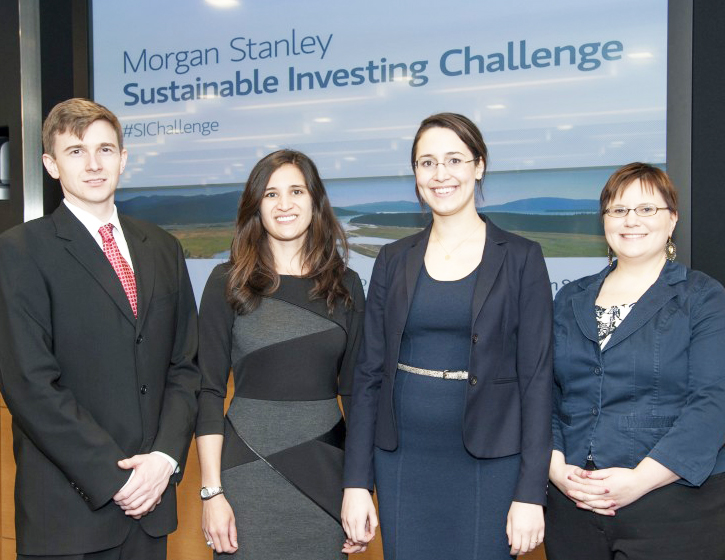
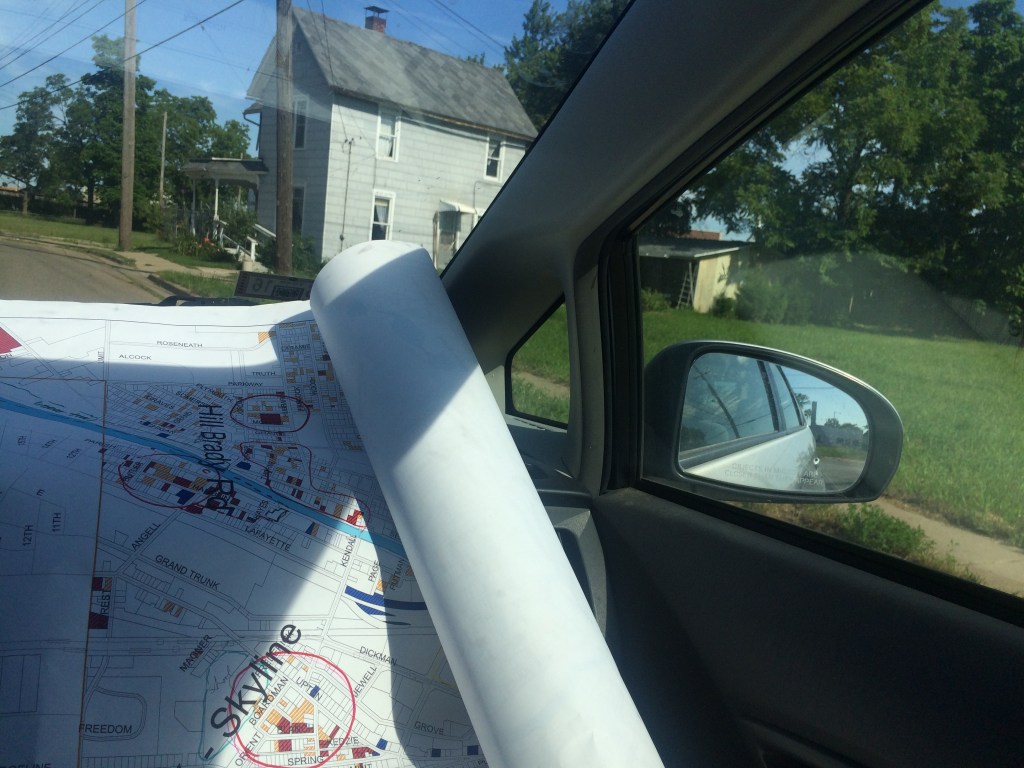
We started the Fresh Coast Capital (later renamed Greenprint Partners) that summer of 2014. Along the way, we shifted our focus from brownfield redevelopment to green stormwater infrastructure development. Our focus on environmental justice has remained constant. My roles at Greenprint ranged from early product development, operations, HR, marketing, business development, fundraising, and executive and Board leadership. We secured investors like the Kresge Foundation and Spring Point Partners. We traveled extensively through the so-called rustbelt of the US through some of the poorest urban zipcodes in the country. We built the organization with an obsession towards culture and action. We forged great friendships. I presented as an invited guest at national conferences. I grew into myself as a leader. I built great success and made grand mistakes. The company is still going strong. A piece of my heart will always be there. And in 2020, fresh from COVID lockdown and parental leave and after 7 years, I left to make space for the company to grow.
3._Aspiring Funder and Investor
It has been a year since stepping down and I have taken my time to write and re-write and re-re-write this story. I have noted before how too often the hero’s journey storyline arc of the entrepreneur skips over the gritty, soul-searching parts, so I consider this my service: to name and acknowledge the private side of my journey. Despite overwhelming evidence to the contrary, when I left my company I couldn’t shake the feeling that I had failed. I spent a lot of time devouring Brene Brown’s Rising Strong. I have begun to form a theory that many underserved entrepreneurs — Women and BIPOC in particular — carry a large emotional burden without trusted family and friend safety nets who share the experience. This is something investors can make space for. The particular flavor of shame I experienced at the end was simply the cumulative effect of 7 years without the time to effectively process the ongoing stress cycles of the micro-wins and micro-fails. Brene writes:
“While vulnerability is the birthplace of many of the fulfilling experiences we long for — love, belonging, joy, creativity, and trust, to name a few — the process of regaining our emotional footing in the midst of struggle is where our courage is tested and our values are forged. Rising strong after a fall is how we cultivate wholeheartedness in our lives; it’s the process that teaches us the most about who we are.”
Brene Brown, Rising Strong
And so the uphill this time has been the biggest challenge of my career, and also the most invigorating and life-affirming time. In January 2021, I doubled down on my commitment to dedicate my work to climate. I build out a life prototype prompted by the (highly recommended) book, Designing Your Life. And since then I have been working steadfast towards this vision, piece by piece.
Curious what that entails? Here is what I have been working on:
- Learning and positioning for my next role in impact investing and/or philanthropy. I am connecting with great people who consider themselves to be on the check-writing side of climate. After a 15+ year career in utilities (water+energy) and as a female founder myself, I want to bring that subject expertise and experience to support the build and success of a portfolio. For example: I have strong opinions about what works and doesn’t in the climate space, and I know what some of the nonmarket risks after 10 years studying utility regulatory policy. (My shock is still fresh at the investors I’ve met who don’t understand how utility regulators approve programs and projects — I want to help bridge that gap). Another example: climate justice in the cleantech space could learn a lot from other sectors.
- Climate reboot. I have been spending time towards refreshing my knowledge on climate tech and learning the market landscape that I don’t already know. I have met with 20+ startups in the last 6 months and will meet with another 40 by the end of the year. For this, the OnDeck Climate Tech Fellowship has been awesome. I have also registered to do the Climate Reality Leadership Corp training this fall.
- Learning and positioning for some work in ESG through corporate strategy consulting and/or Board service. The importance of DE&I, impact reporting, and strong corporate governance practices to support climate and social impact is a strong interest of mine. I am advising on this topic in several ways, and it continues to form the backbone of my work through this phase of my career.
- Taking the time to stay present. When I am with my kids and family, I make the effort to be there. While I am in this phase of my career, I am enjoying a bit of extra time with my kids in the afternoons. I also look forward to going back to that full workday I am accustomed to. Simple, yet beautifully messy and profound stuff. Most of all, I am working on listening to myself.
 Laura Brenner Kimes
2 thoughts on “My Climate Career”